

Lifelong creative Kenneth Green and Gallery Director Alessandra Moctezuma engaged in a powerful dialogue about the art exhibit “Clothes Story: An Exhibit Highlighting African American Women’s Clothing from 1890 to 1963” displayed at our Mesa College Art Gallery this past Wednesday.
More than fifty people were present to listen and take in this exhibit, including students, staff and members of the public. During the dialogue, several people spoke up about their appreciation for the exhibit and what it stood for.
One audience member said, “This here is fantastic, and I’m glad you’ve done it.”
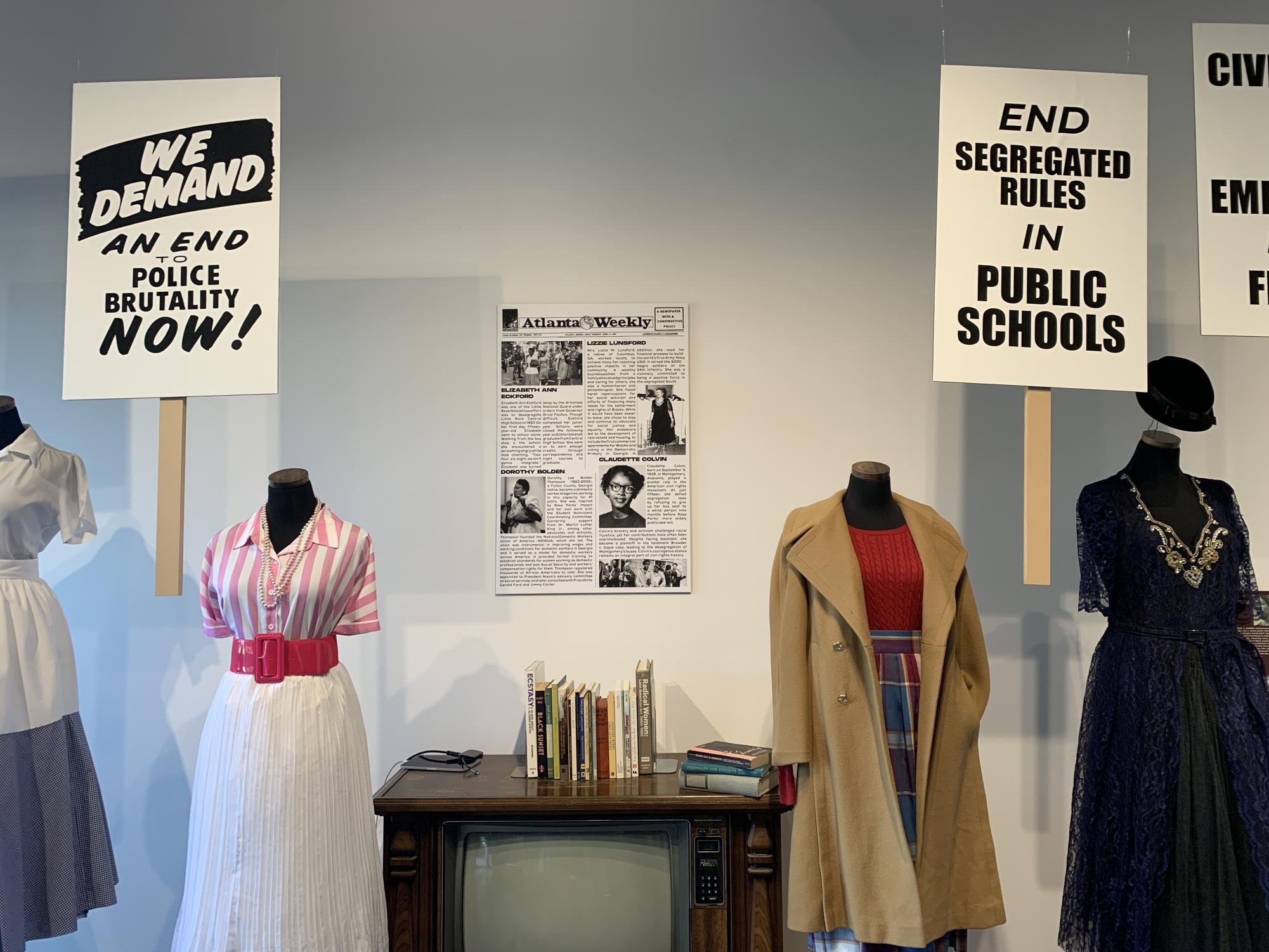
The exhibit featured more than a dozen dresses and outfits crafted to be as faithful to their original designs as possible. Alongside the outfits, were plaques with information on who originally wore the outfits, the time period in which they were worn and the struggles that the women faced.
Outfits were separated into a handful of sections, including the civil rights movement, Victorian England, and a section labeled first in their field. This focused on African American women who were prolific in fields of medicine and science. Green, creator of “Clothes Story”, commented on this section’s relevancy to the history of gynecology, and James Marion Sims’s experiments on enslaved Black women.
“You all remember a while ago when they were tearing down statues, [James Sims] was one of the ones they tore down.” Green said.
Moctezuma said to the people in attendance that she believed the exhibit was important. She noted how the exhibit displays the progression of fashion alongside the history of civil rights and discrimination.
Moctezuma said, “This is especially important now in our current time as people are trying to rewrite history.”
Green and Moctezuma were both appreciative to the staff, who were former students who went through the Mesa Museum Studies program, who helped get the gallery ready for the exhibition. Green was especially impressed with how prepared and willing to help the staff at the Mesa Art Gallery were.
“The students [sic] have been amazing! They’re so well-trained, and they really knew what to do.” Green said.
Green is a lecturer, producer and creative director based out of Atlanta. He described the exhibit as a passion project, inspired by his mother, who was a seamstress for all her life. Despite being far more interested in theater and music as a child, as he grew older he gained a bigger appreciation for fashion and especially historical fashion.
Green said, “So I never watched my mother sew when I was young ya know, but as I got older, and I became drawn to this, I did watch other people sew.”
He said up to 15 people at different times contributed to this project coming to fruition. Despite the project not being finished, he has travelled across the country to display it. This most recent exhibition was the first time the project was displayed on the West Coast, and in a little over a week it will be shown at Harvard University.
“The project is still young.” Green said.
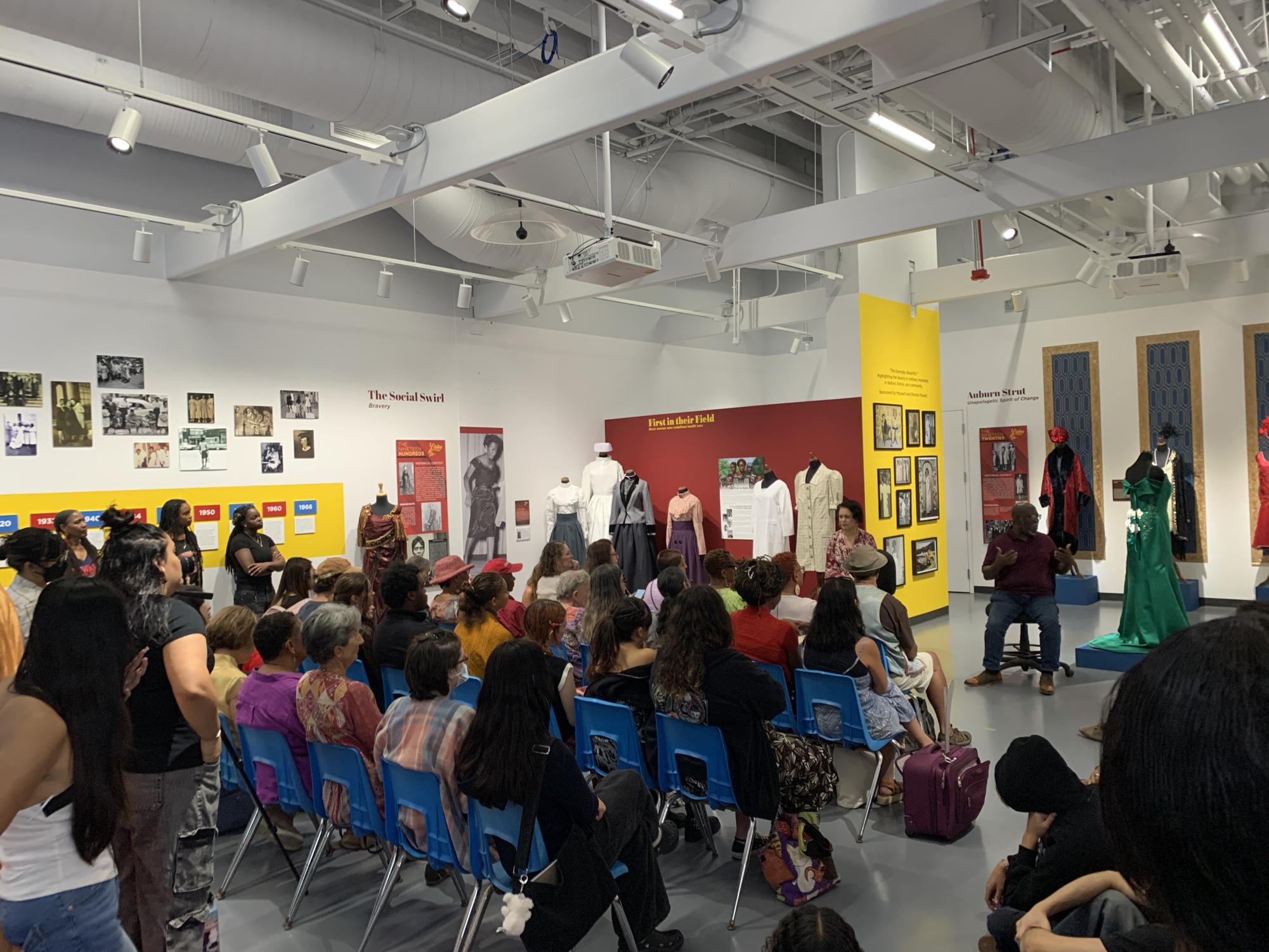
Green spoke passionately about his love for “Clothes Story”, and for every step of the process, including researching through archives for as many high quality photos as possible to base the outfits off of. A particularly useful resource he used was the Auburn Avenue Research Library in Atlanta, which he said had a useful collection of black and white photos.
Green brought up several issues that made the project difficult, including learning how to design and create clothing, but the hardest part of the project has been fundraising for it. He was very forward about the fact that almost all the outfits were made using discounted fabrics.
Green said, “People just don’t have the money they used to anymore to support this kind of thing.”
Despite these difficulties, though, Green has stayed positive and committed to “Clothes Story”. And he encouraged all people who wish to be creative to take the initiative and just start making.
“Follow your dreams, follow your passions, work very, very hard. Try to figure out early what you wanna do, then just go for it!” Green said.
Corrections: The story was updated on Thursday, Sept. 18, 2025 at 11:50 a.m. to clarify that it was staff who assisted Kenneth Green.
